
Thread or cork on bassoon tenons: differences, advantages and which to choose
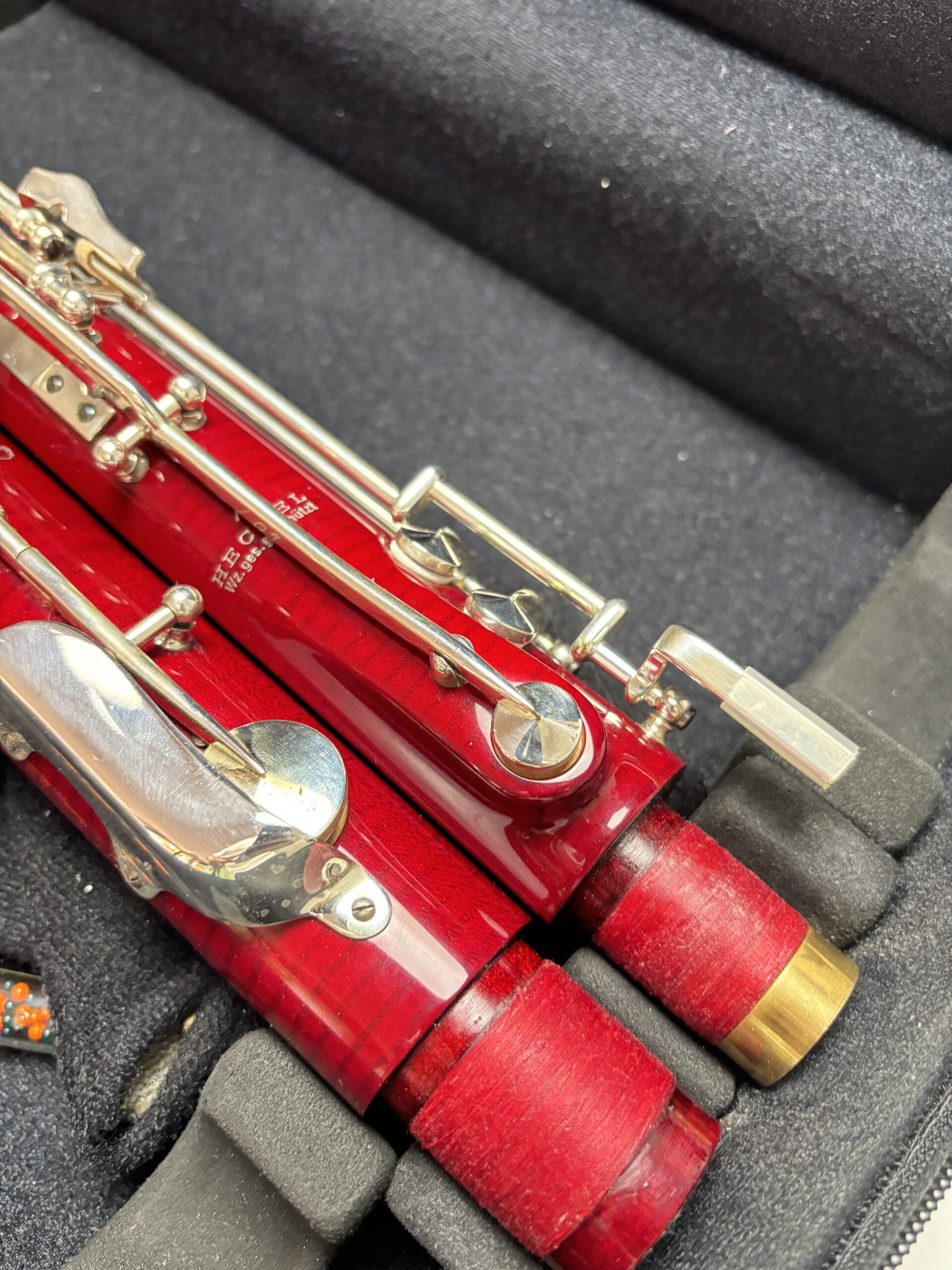
Thread or cork on bassoon tenons? The answer is not so simple
By Miguel Mesa – Mesa Bassoon Repair
When discussing bassoon maintenance, one of the questions I hear most often is:
Is thread or cork better for bassoon tenons?
The answer surprises many players, because it is less about which material is best and more about how the instrument was designed.
There is a common belief that cork replaced thread because it was a more modern and effective solution. However, the history and engineering of the bassoon tell a different story.
Thread came first
Although we now associate cork with most woodwind instruments, thread was the first material used for detachable joints.
Early predecessors of the bassoon, such as the dulcian, had very few joints. When instruments began to be made in separate sections, thread was the material chosen to seal and protect the tenons.
Cork appeared later, driven by the requirements of other instruments.
Why do clarinets and oboes use cork?
The answer lies in their design.
On instruments such as the clarinet and oboe, the tone holes are very close together. This calls for much shorter, more compact tenons.
In this type of joint, cork works extremely well and allows quick, comfortable assembly.
It was a solution adapted to a completely different design, rather than an improvement on thread.
The bassoon follows different rules
The bassoon has a unique construction.
The greater distance between tone holes allows long tenons, particularly on the long joint and bell.
This brings us to one of the main advantages of thread:
On a long tenon, thread provides an excellent seal without the need for cork.
But this is not the main reason it is still used.
The real function of thread
The end of the bassoon’s long joint has a surprisingly thin wooden wall.
Yet this area carries a considerable load.
When we play, the weight of the upper joint and bell places constant stress on this connection.
Thread wound around the tenon acts as structural reinforcement, helping to contain the wood and distribute stresses more evenly.
As a result, it:
- increases the strength of the tenon;
- reduces the risk of cracks developing;
- improves the long-term stability of the joint.
Cork, by contrast, provides very little mechanical reinforcement.
Not all tenons are the same
Another point that is often overlooked is that the choice of material depends on the tenon’s design.
Tapered tenons
These are designed to work with thread.
The taper allows a progressive, very stable fit that better accommodates the small changes caused by moisture in the wood.
Cylindrical tenons
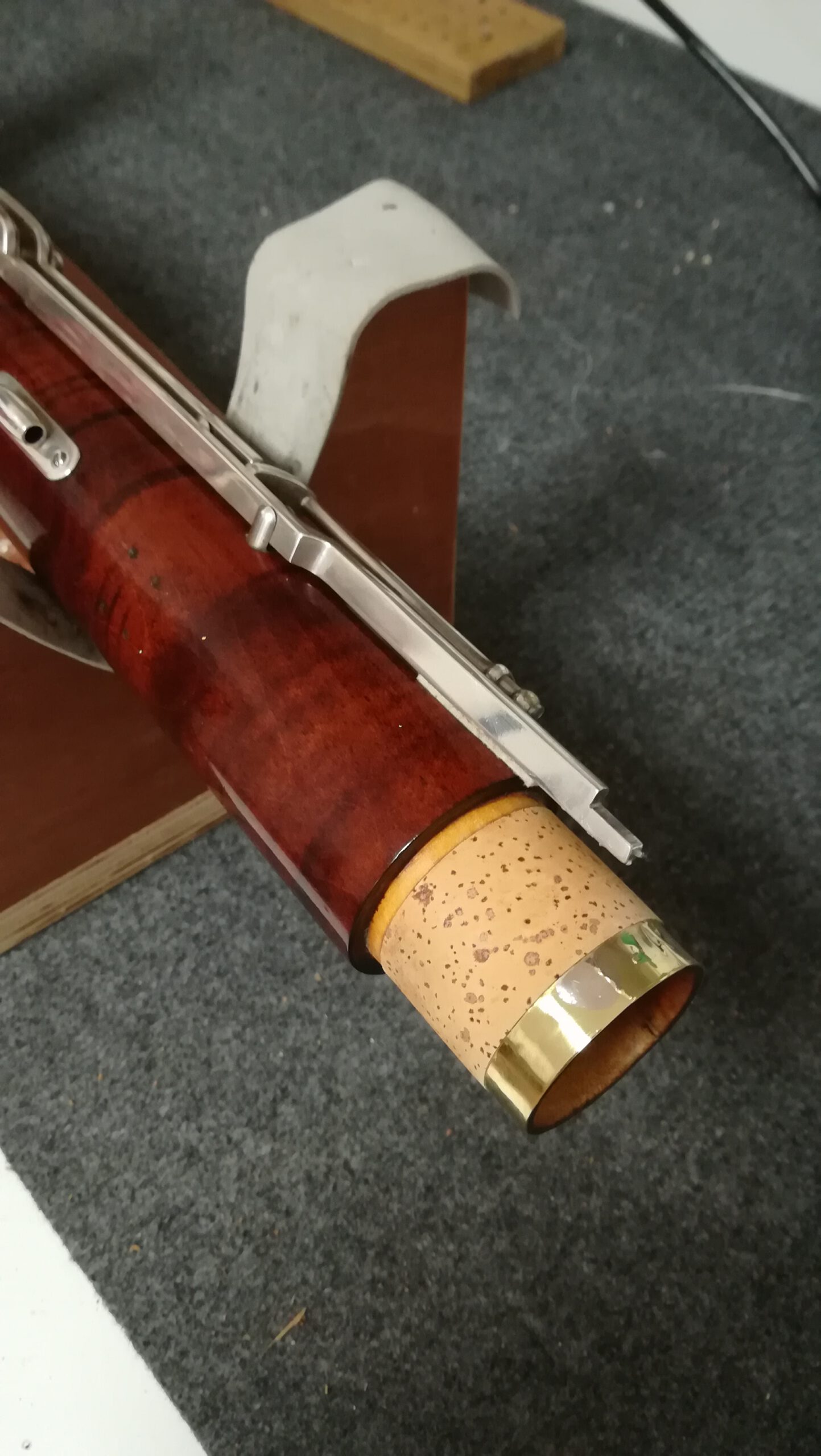
These are designed to use cork.
On this type of joint, replacing cork with thread generally produces poorer results because the geometry of the system is completely different.
The importance of the taper
Wood changes size slightly with variations in temperature and humidity.
In a cylindrical joint, these small changes can make the tenon fit too tightly or too loosely.
A tapered joint, on the other hand, maintains a much more consistent fit.
This is one reason why many traditional makers of professional bassoons have retained this system for generations.
It is not simply a matter of tradition.
It is an engineering decision.
So… is thread or cork better?
The reality is that neither is inherently better.
Each system was designed for a particular type of tenon.
That is why, in restoration and repair, the most important thing is to respect the manufacturer’s original design.
Why do most professional bassoons use thread?
On modern bassoons in the German tradition (Heckel, Püchner, Bell, Moosmann, etc.), the tenons are designed with a slight taper. This is no accident.
The combination of a tapered tenon and thread offers several advantages over a cork joint:
1. Greater mechanical stability
Thread does more than provide a seal.
Wound around the tenon, it helps contain one of the instrument’s most delicate areas: the thin wooden walls of the tenon.
This helps distribute stresses more evenly and reduces the risk of cracks developing over the years.
2. Better response to humidity
Wood changes size slightly with variations in humidity and temperature.
On a tapered tenon, the fit remains progressive and stable even when these small changes occur.
This is why the system gives a much more consistent feel during assembly.
3. A progressive fit
Unlike a cylindrical joint, a taper allows the two parts to make contact gradually.
The result is a firm, precise connection that is easy to control during maintenance.
4. Respect for the instrument’s original design
The great makers did not choose thread simply out of tradition.
They chose it because it forms part of the bassoon’s mechanical design.
The tenon, socket and thread work together as a single system.
Changing one of these elements means altering a system designed to work in a particular way.
Why, then, do some bassoons use cork?
Mainly because some manufacturers chose cylindrical tenons and designed the entire joint around cork.
On those instruments, cork is the correct solution.
But on a bassoon designed with tapered tenons, thread provides both an excellent seal and a structural advantage that cork cannot offer.
My experience in the workshop
In my experience as a repair specialist, correctly applied thread also allows much finer adjustments to the thickness of the tenon than cork. This makes it easier to achieve a firm, even fit tailored to each instrument—something particularly important on high-end bassoons.
Conclusion
The next time you see a tenon wrapped in thread, remember that it is not there simply out of tradition or because it is an “old-fashioned” solution.
On many bassoons, it is part of the instrument’s structure, helping to reinforce one of its most delicate areas and maintain a stable fit over the years.
In bassoon repair, the best results come from understanding why each system was designed that way in the first place, rather than replacing every system with the newest alternative.
Selected workshop projects


